When all is said and done, if others would say “he is a good man”, that would provide me great joy, warm my heart and replenish my soul. I have engaged in several moments of character suicide in way I have thought, spoke and acted for far too long. Integrity became compost and ego reigned over all.
But I started to listen instead of ignore. See instead of obfuscate. Behave in life of acting out. Rebuilding one piece at a time. However long it may take. For whatever time I have left.
Since I am involved in coaching, whether it be Special Olympics, job development for those with diverse abilities or good old football, I would have to say the first day of a season or the first meeting with a new associate is the best day. Days that really aren’t ever one and done. But moments that build and transition into other first days.
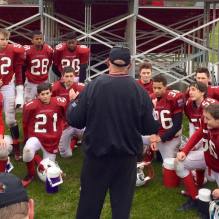
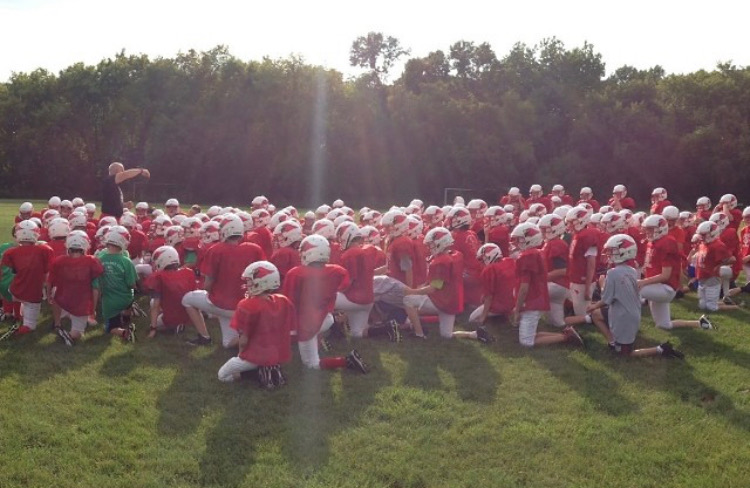
A first practice allows you to witness the work they have embraced in the off-season, weightroom, classroom, community and home. You get to see what they are beoming, the yearning to take those next steps to become something more for the team. Whether it is a scout, one that comes off the bench, or a leader that never comes off the field. As a coach, you get to help guide them along a path of their choosing. It is you that can help them see something bigger than themselves and then realize that vision.
Then if you remain connected, you can watch them do the same in college and their initial foray into the business world, whether employee or entrepeneur.
A first meeting to discuss job development is in many ways the same. You can learn of the progress they have made in their life despite their challenges. Whether they are at home, or gaining independence within a group community, you can see their excitement to learn, grow and become something more than they ever have been before.
Perhaps they start in the back of a business, learning the ropes. Maybe that gives them all the contentment and growth they need. Others may want to work there way up and out to the front. Filling in for teammates that are out or have elected to move on. Maybe they see themselves becoming the one that opens the door and turns on the lights each day.
It is coaching that takes place on other venues. It is still all about guiding them along a path of their choosing. But if you can see something bigger in themselves than they realize, you get to share that vision with them, and help them to grow into it.
It can be difficult to remember or recall all of the firsts I had throughout my life. But there is truly something to be said to be a part in those of others. For that reason, I am blessed to be able to participate in so many “firsts”.
Well, my stage career began and ended with Mr. Tantillo’s 7th & 8th grade Barbershop Music classes at the Hinsdale Junior High School, about 1972 or 3 BC. I had the fortune of singing lead in a quartet that travelled as far as Milwaukee, to share “My Wild Irish Rose” when our turn came up during the program.
Heading out on that proverbial limb, I think it was Russ that sang bass, Mike that was our baritone, and the tenor’s name? Escapes me for now. But when I remember it at 1:43 AM, I will add it in. We usually concluded our concerts with “Good-bye My Coney Island Baby”. Upon retirement when I graduated from junior high, my singing moments were reserved for “Rosalita” in college and are now preserved in the friendly confines of my car with my friends at WXRT or the Drive.
However, since then, I have also been blessed with opportunities to create some of my own melodies in public speaking around the community. My involvement in football as a player and now a coach has afforded me chances to speak to players whether on the field at practice or at other events, share my thoughts with the staff, players and families at weekly high school team dinners and teach coaching concepts at football clinics around the state.
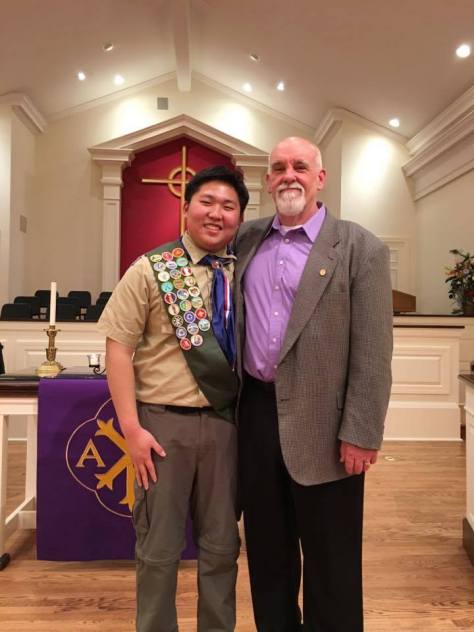
I also became a guest lecturer at a near by college and through my involvement as a mentor for the local Boy Scout troops, provide the earned accolades for soaring as an Eagle at their court of honor. Of late, I have had the chance to share a daily devotional with my new team and explore the spiritual essence of other readings with another close coaching friend of mine.
These daily prompts are such a treasure. They reveal things to me I just did not even consider.
Singing was scary to start. Being out in front of many with three others carrying a tune. But now that I look back, it was a sorely needed source of joy for a young man that pretty much kept to himself. Since some arbitrary test I took in grade school disqualified me from learning an instrument, having the opportunity to just sing was a Godsend. A way to express a passion I had for music. Apart from laying on the living room floor next to the RCA console, reading liner notes and playing records at “11”. Not sure what led me to neglect that path once I went into highschool. Maybe it was football that took front and center.
So the melody I have been able to share in public speaking shares the same source of passion. To articulate feelings, sensations and hopes through words. Not telling anyone what to do or how to do it. But moreso what is to be gained if you surrender yourself to that undertaking without regret. The memories it will create within those moments and for the rest of your life. How fulfilling just leaving it all out there, regardless of the outcome, can be. And is.
And when you can connect with another or others within a sea of faces and lives, you just know it.
The eye contact. The body language. The expression. You sense their presence in your melody. And within you. A feeling of connection and intimacy that just escapes description.
Exactly why you just need to leave it all out there, surrender and dismiss the possibility of regret.
Back in the day, running was by far my most favored way to maintain a level of physical, mental, emotional and spiritual fitness. Would just start, head out in some direction and turn back around when I thought it right. Early evening was so peaceful.
God I miss that.
When I got back on the bike, I tended to follow the same map. Just go. From a a joy standpoint, cycling was a close second, provided dogs remained on their leashes and cars acknowledged my presence.
But running was by far my favorite way to escape.
As the residue of my football days began to materialize and eventually solidify, pushing a lawn mower, raking the yard and shoveling snow became outlets similar to running. Maybe not entirely from a physical sense. But provided an abundance of mental, emotional and spiritual release and gratification if only on a seasonal basis.
To fill in the voids, there are sojourns to PF for some bike time, then “pushing” one day and “pulling” the next, to test and rest appropriate muscle groups. All told, wrapped up in about 90 minutes.
Not quite a run.
And as time passes, pushing the mower may have to exit stage left. Perhaps a Uranium Pu-39 Knee Modulator is in my future. Not sure that running will be allowed ever again by Dr. Orthopod. But if the walks can begin to regrow, perhaps I can find a way back to that place where my head, heart and soul traveled to during those runs I took long ago.
Being a late bloomer, and to be honest, in many respects I remain in that process, hearing, talking to and witnessing others that have embraced a long, arduous and resilient journey to personal fulfillment is something to truly take in, absorb and admire.
You can be coached and mentored with out any such appellation by friends, coworkers, family or complete strangers, if you are open to being fully present in those instances. It may require you to lower the walls, reduce the ego and welcome a life lesson. But even the smallest of moments can have a wonderful and sustaining impact on your own being.
I can honestly call upon their experience, wisdom and fortitude when I find myself in similar situations. It all adds up. Not one of those moments are wasted or inconsequential. Then perhaps next time I encounter them, not only can I ask how their path has been of late, but I can thank them for helping me along mine. Sharing at its essence.
Though the seasons may say otherwise. I want to become a perennial. Like all of them. And eventually, God help me, bloom all of the time.





 ...my temporary assignment.