For these reasons.

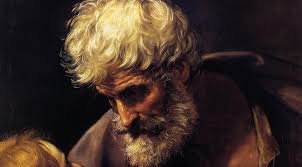
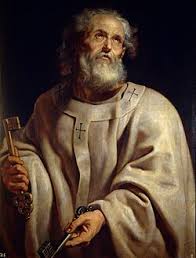
It floors me that something initially written by an apostle and shared around the first century still has a clarity and resonance to this day, without the need of reformatting it into our current language.

Perhaps some of you upon seeing the word “apostle” within will be urged to click away. I hope not. Though this was penned by one who would later be martyred for his beliefs, the progression of the thoughts behind these words truly leads one to what life can all about.

And become.

Ttoday, they could be fashioned into some business or athletic team mantra. Perhaps a personal daily devotion, of the secular, or the non variety. The construction of his thoughts just happened to sit just right within me earlier this morning for some reason. While the prompt then didn’t really appeal to me, sharing my thoughts on this did.

“…make every effort to supplement your faith with virtue,

virtue with knowledge, knowledge with self-control,

self-control with endurance, endurance with devotion,

devotion with mutual affection, mutual affection with love.”

Peter

Wow.

Faith can be directed towards and embraced in a higher power, as you understand it to be. And virtue is simply how you abide by the direction-of-travel-arrow within your personal moral compass. An inculcation of knowledge, knowing both yourself and the world in a deeper understanding works back towards the supplementation of faith and virtue while feeding the growth of self-control and its twin sibling, self discipline.

That aspect of this journey was not designed to be a sprint, but instead a marathon. Thus, endurance in every aspect – physical, mental, emotional and spiritual – needs to be enhanced and built over time in order to reinforce the journey. This act lends itself towards a genuine devotion towards this path.

Then, once this level of change begins to embrace and transform you, its presence within your being becomes increasingly evident. As such, you cannot help but share this evolution with both the world and those all around you. It will never affive asdirectives or directions, but moreso in the form of you as exemplar.

Through compelling honesty and open vulnerability, an affirming level of intention will generate trust and a burgeoning fellowship withn all your interactions. As it matures, true mutual affection will emerge towards others. Wanting what is best for them.

And when this occurs, ultimately, all that was before, will then become. love.

Wow.

Whether 64 AD or June 1, 2026, his words remain and ring true.

To this man.

For these reasons.

Drydock can be a blessing.

Something dawned on me a day or so ago regarding an oft used expletive.

It seems to explain a sense of dismissal, mockery and ultimately degradation regularlybencountered of late. Well, not of late, pretty much for decades. It is just that now, this particular perspective may help create a path not just toward deeper understanding, but avoidance on multiple levels. A deeper honesty in the context of thought, word and deed.

Six letters in total, the first being “F” and the last being “U”, constructed to create two words generally employed to incite, demean, diminish, create an aura of false bravado and shock others. These days, seems like that combination is thrown about in a perpetual motion, no matter the setting. Wonder what those in the field of semantics have to say about that. Heck, the language I grew up knowing? It is pretty much gone.

Sorry, back to the point.

When I would tell someone I was committed, going to do it, take care of it, follow up on it, handle it , assume responsibility for it and make it happen – but didn’t – I was essentially conveying those two words back to the receiver. Indirectly. Yet purposefully. With the warmth of purpose.

Same with saying I would listen, would try to understand, be patient, work with them, remain in contact, stand with them, help in any way I could – but didn’t. Subtly, yet delivered in a falsely comforting and empathetic manner.

How about acting like I knew it all, was never wrong, had the best way through and out, had done it all before, you cannot handle this and you need to get out the way so I can again? A flagrant confirmation of those two words, but now illustrated through some machismo theatrics.

So what brought this to mind?

Finally realizing and appreciating what it was like to be on the receiving end of it. I now find it to be the best way to describe a thought process designed to dismiss, mock and degrade another, through your “well intentioned” promissory thoughts, words and deeds, meant to inflate you while deflating the other.

Indirectly, subtly, flagrantly, in action. In person. It is essentially, F – – – Y- – . But with a smile and a comforting arm around the shoulder.

Stealing the wind from their sails, so you can drive your misguided adventure.

Drydock can be a blessing.

And therein lay the healing.

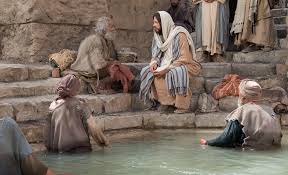
This morning’s gospel John 5:1-16, was broken down into an amazing insight.  At least for this guy.  You can always read the words but unless deeper perspectives from others are offered and shared in a meaningful way, you may find yourself living in quite the linear manner. 

The intention within this biblical discourse is apparent.  But when other ways of looking at this particular interaction at a healing pool in Bethesda are provided, the connection takes on a whole new mass.  It truly reflects what the name literally means, “house of mercy, or grace.” 

“Do you want to be well?”

The sick man answered him, “Sir, I have no one to put me into the pool when the water is stirred up; while I am on my way, someone else gets down there before me.”

Father pointed out that the man, invalided for thirty-eight some years, did not answer His question.  Instead, he went on to describe his life, wrought of isolation, abandonment and hopelessness.  Not just that I have no one to help me into the pool, but pure and simple, “I have no one”.  

Father suggested that perhaps when he was younger, family may have helped him move about to partake in some of these healing moments in the water.  But now, approaching the middle of his life, he is essentially by himself. 

Alone.  

“While I am on my way, someone else gets down there before me”, emphasizing the utter disregard of others and his worthlessness to society. 

Imagine that.

Not just crippled for life, immovable and unable. But deemed unneeded, untouchable and unloved.  Being so crippled by that horrific experience that he didn’t even hear the question posed.

And it wasn’t asked a second time either.  He just healed him and sent him on his way.  Too bad some of that healing didn’t waft its way over to the clerics admonishing him for having the audacity to carry his mat, for the first time in his life, on the sabbath. 

Crippled may carry with it the connotation of strictly physical limitations.  But it may come to impart its will on one’s mental or emotional state.  Perhaps even spiritually.  It can be an all inclusive state.

So while He mended his body, He truly mended the man’s spirit.  Giving him life in more ways than one. We are all asked to do the same.  To be there for others.

One way alms were described to me was to simply give of yourself.  Your time.  Your empathy and compassion.  And therein lay the healing. support.  Your love.  Your presence. All forms of personal wealth we can access and share abundantly without ever breaking the bank.

So when you find yourself in a house of grace, do your part to offer alms of healing as best as you can.

You will never be expected to say ““Stand up, take your mat and walk.”

That is what He does. 

But you can definitely listen with true compassion, offer them support and love, and help them to rise from defeat and isolation.  

Simply be present for them, in that house of mercy.

For He would want you to.  

And therein lay the healing.

As only a father could.

Daily writing prompt
What is the last thing you learned?

“Chora makra”.

Well, not the last thing. But this morning when I came upon it, some things in life were no longer Greek to me.

Sorry. It’s genetic.

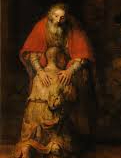
The parable of the prodigal son in today’s gospel according to Luke, related the story of the two sons, that in their own ways, left their father. The younger, requested his inheritance up front, bid adieu to his loving father and travelled to a “distant country” – chora mokra.

The elder, though he chose to remain at home, made the same trek, in his own way, far away from his father, also to chora mokra. Distancing himself from that unconditional love through resentment, anger and jealousy.

While chora mokra is often ranslated as “distant country”, the reflection that followed from Bishop Barron brought to mind the literal meaning in a spiritual emphasis.

“The great emptiness”.

Think about that now for a moment.

The younger son took his inheritance in advance, a slap in the face of his loving father, to splurge it on a venture laden with debauchery that only served to wrought upon him a great emptiness.

In mind.

Body.

And soul.

Meanwhile, the elder son, remaining at home out of duty, disguising ego, discredited his father’s genuine love for him and his sibling in a fit of jealous resentment. In so doing, he too found his own way into the great emptiness. Removing himself from his father and what he was gifted unconditionally, in a childish fit of spite. Bringing with its own inherent brand of emptiness.

Of mind.

Body.

And soul.

Both went their own way, literally and figuratively, to a distant country.

And both were warmly welcomed back from their chora makra.

Without condition.

As only a father could.

To that, I will not object.

Daily writing prompt
What are three objects you couldn’t live without?

Well, on the material side of things, coffee? Maybe having blue tooth so I can listen to my radio station from when I was growing up. Kind of tough to answer that one. I could go to tea, or water if needed. Have before. Sometimes a local radio station will suffice. That is still only two. Not sure.

But that is one definition of object. A material thing that can be seen and touched. Huh. Maybe that disqualifies the blue tooth. Unless the holding the phone and pushing the site on the screen counts. But blue tooth really cannot be seen or touched. So perhaps that statement needs to be amended to “having a phone with blue tooth so I can listen to my radio station from when I was growing up.” There. Is my OCD an object? But I digress….

The other is ” a person or thing to which a specified action or feeling is directed.” If you look at it in this fashion, three things immediately come to mind.

Trust.

Intention.

Faith.

Trust can generate some very specific actions and feelings. What you come to allow in others as well as in yourself. It has been my experience of late that I find it way easier to do so with othose around me than it has ever been with myself. That is changing. Still some things yet to prove on my end. It is an object I cannot live without.

Add to that, intention. Something deeper than “want to”, commitment or goal. Intention reflects a direct investment of self into another object that has no guaranteed outcome. Just that in many ways and means needs to be employed and embraced. Not as a thing to be touched or seen. But a depth of giving of onself that is sensed, felt and fully woven into one’s being.

The intention may be to have a positive impact on another. And then again, it may be to have one on yourself. No guarantees. Just a way of being that goes beyond once incorporated, spreading inward and outwards.

Lastly, faith.

Not really lastly. Really firstly. Because it is only through faith that you are able to actively engage in patience with perseverance. There is a knowing component that provides the salve for the waiting. The continuous deployment of trust in the direction and intentional thoughts, words and deeds through the acts of perseverance.

Objects are of little importance to me.

Objects to which a trusted, intentional action, guided by faith is directed, are.

To that, I will not object.