Sure am glad I did.

It is comforting how the gospels and the reflections offered reflect the present moment and circumstance. Perhaps there are days when they require a deeper level of discernment. But then again, they can appear on the marquis, lights ablaze, drawing one to step in and see what it is He is showing.

Bishop Barron as a wonderful way of cutting to the chase. Breaking down thoughts and words conceptualized and spoken hundreds, if not thousands of years ago, into the raw essence of their devotional meaning. Truly a gift in my estimation in that things can become obscured from their honest intention, whether by accident or design.

Today, we are called to change our hearts and behaviors.

As the Bishop so shared: “St. Augustine defines sin as incurvatus in se—that means ‘caved in around oneself.’ To be in sin is to be ‘caved in’ around the ego and its narrow concerns.” I then went a little further and found “incurvatus in se” referred to as being “curved in on oneself”. Being self-absorbed to the extent that focus, desire and effort is consumed entirely to the benefit of oneself, to the abandonment of others.
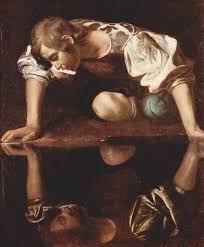
Speaking from experience, a level of this degree of self-absorption can lead to a wide and debilitating array of negative consequences. Among them perpetual, scathing self-analysis, life-long score-keeping, an affinity and affection for deception and additional, destructive modes of ensuring a gathering isolation. Upon some ongoing, in depth discernment, discussion and reflection, I can say for certain, that being “caved in” or “curved in on one self” hits the nail on the head.

So following the Latin route given to me today, a better path would be “excurvatus ex se”. In other words, approaching life curved outward. With an open, honest and receptive focus on others and God. Ceding that quest for internal control brings with it serenity and genuine peace. Something that can create a level of affirmation never quite known before.

With that newfound perspective comes that same wish for others.

Not born of the self absorbed confines of an incurvatus ego and judgement. But rather a true outward excurvatus perspective of what it is really all about; others.

Not because I say so.

But simply because it is.

Took me quite a while to finally get geometry.

Sure am glad I did.

…as it is meant to be.

“The logic of worldly success rests on a fallacy: the strange error that our perfection depends on the thoughts and opinions and applause of other men! A weird life it is, indeed, to be living always in somebody else’s imagination, as if that were the only place in which one could at last become real!”
― Thomas Merton, The Seven Storey Mountain

Funny how thoughts initially shared seventy some years ago have a stinging revelance even today. Even more comical that I chose to employ this mode of sharing it with you all. Perhaps in the hope of attaining opinion and applause. But I digress…

Speaking as one who knows well of the cunning nature of social media, it is stunning that he phrased this the way he did so long ago. Perhaps back then, a similar quest for “perfection” was driven through the papers and radio.

A weird life it is.

Attempting to live always in another’s imagination. As if that were the only place one could become real.

Now I came to be roughly a decade after this was written. And to be honest, I do like to share my thoughts and myself via this mode of interaction. Perhaps I need to engage in some discernment regarding the imagination and becoming real aspects of his insights.

But then again, whether it be business or personal, an actual conversation is the best way to achieve and maintain that sense of reality. Even better? Grab a cup of Joe and sit face to face. Take a walk together. Sit in a park and talk. But there I go showing my age.

Don’t get me wrong, stimulating the imagination is a great thing. Potentially a truly genuine source of inspiration, aspiration even affirmation in some sense. Yet in some way, we need to close the gap, reduce the space and make us all less remote to one another.

That way we can be truly present.

Really there.

And totally real.

Not so much a weird life.

Just life as it is meant to be.

“Areté ”

ah-reh-‘tay

In its most basic sense, a word from the ancient Greeks meaning  “excellence of any kind”.

Taking a bit of semantic and philosophical license, Areté  could be defined as  “moral virtue”.  And given the nature of that concept – virtue –  it stands to reason that excellence is derivative of virtuous thoughts, words and deeds.   Of doing the right thing.

For as Plato said, “We do not act rightly because we are excellent, in fact we achieve excellence by acting rightly.” Greek mythology made Areté  divinity; the goddess of virtue, excellence, goodness and valour.

“There is a tale that Areté dwells on unclimbable rocks and close to the gods, tending a holy place.  She may not be seen by the eyes of all mortals, but only by him on whom distressing sweat comes from within, the one who reaches the peak of manliness.”

An acknowledgement that excellence is a higher standing. A path that  is intended to be a struggle.  A challenge.  A journey to elicit excellence.

Socrates, Plato and Aristotle –  the renowned triumvirate of Greek philosophers, teachers and orators – spent their lives in the pursuit of understanding  our human condition.  Discerning how best to find our rightful place.  Here, in the mortal world,  and within the universe, among  the divine.

Since its earliest appearance in Greek, there is the idea that Areté  was ultimately bound up with the notion of the fulfillment of purpose or function: the act of living up to one’s full potential.

Throughout the Homeric poems, Areté is frequently associated with bravery, but more often, with effectiveness. The man or woman of Areté is a person of the highest effectiveness; they use all their faculties: strength, bravery and wit, to achieve real results. In the Homeric world, then, Areté involves all of the abilities and potentialities available to humans.

In the mortal sense, excellence is about making the most of all that we are and all that we have  – to become all you were meant to be.  In so doing, you endeavor to approach the divine,  by acting rightly.

We  strive because there is virtue in it.  We strive, because it is the right thing to do.  More than just a word, motto or mindset.   Arete – excellence –  is a mandate.  A command.

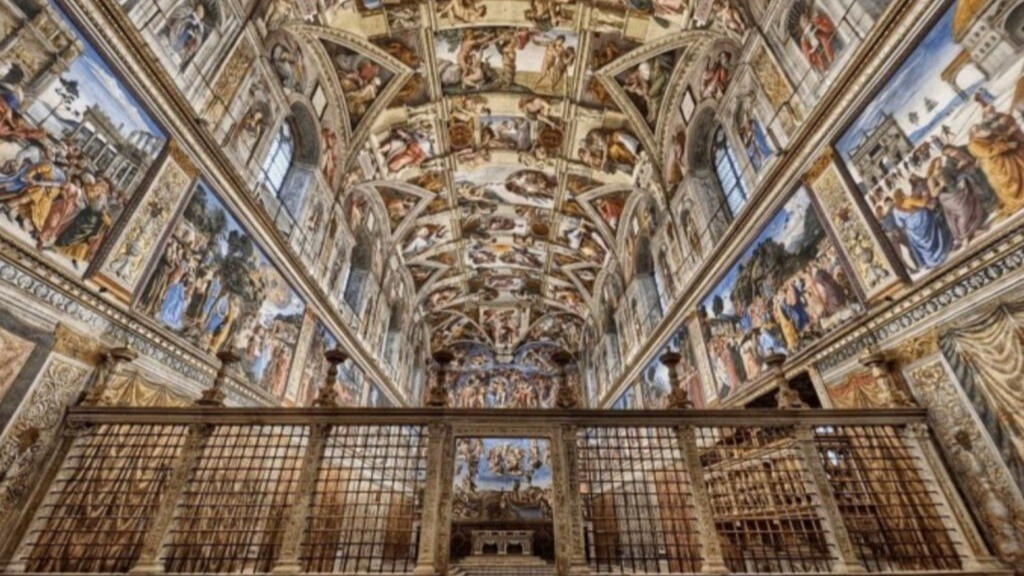
Michaelangelo could also have heard this command.  To make the absolute most of his abilities and potential.  And by virtue of his actions, become a true renaissance man.

“If people knew how hard I worked to get my mastery, it wouldn’t seem so wonderful after all.” he is said to have remarked.  Stating what  could be  a common refrain for those that choose to pursue excellence.  For it is work.  And only committed, ceaseless effort can render such compelling results.

Michelangelo was not only regarded as the greatest living artist of his lifetime, but is now considered to be one of the greatest artists of all time.  A number of his works in painting, sculpture, and architecture rank among the most compelling and famous in existence. His output in every field during his long life was prodigious.  When the sheer volume of his correspondence, sketches, and reminiscences that survive are taken into account, he is the best documented artist of the 16th century.”

It may not have dawned on him – as he was putting the finishing touches on that chapel ceiling or inscribing  his name on Mary’s sash of marble – that his efforts would some day make him a man with global impact.  But then again, he was pursuing  excellence.  A level of excellence that to this day inspires artisans, architects and others to aspire.

John Uebersax sought to sum it up in this fashion: “No English word or phrase captures the exact meaning of Areté . The nearest equivalents are ‘excellence’ and ‘virtue’. But there is something more to Areté which cannot be expressed in words. There is something of the divine in it.”*

From a mortal perspective; we are commanded  to make the most of all that we are  and all that we have. To become all we are meant to be.  By accepting this edict, we can then endeavor to approach the divine. By  virtue of our right thoughts, words and deeds, we can climb those unclimbable rocks.

To that  place where Arete dwells.   For…” in the moment of excellence, something transcends the mundane and touches the ideal.”

*John Ubersaz – https://www.john-uebersax.com/plato/pdf/greektermsebook.pdf