Listen.

Luke 8:16-18

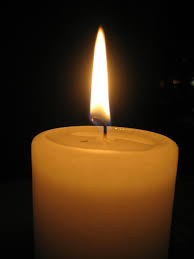
“No one after lighting a lamp hides it under a jar, or puts it under a bed, but puts it on a lampstand, so that those who enter may see the light. For nothing is hidden that will not be disclosed, nor is anything secret that will not become known and come to light. Then pay attention to how you listen; for to those who have, more will be given; and from those who do not have, even what they seem to have will be taken away.”

Fitting words for the times we find ourselves in.

Impeccable timing as well.

A faith journey brings with it enhanced and enlightened senses. What might have been simply glossed over before, now seems so obvious, compelling and illuminating. The sentences, the phrasing and the words take on an entirely new meaning.

In the past few days, the lamp has become a beacon. Things hidden away in the dark are becoming known and coming to light.

“Pay attention to how you listen; for to those who have, more will be given;”. When your senses awaken, things sound different. They take on new meaning. Carry a different weight. If you hear it like that once, you will hear it like that again. Again. And again. More of that will be given if only you can hear.

“…and from those who do not have, even what they seem to have will be taken away.” Those who have not listened. What they seem to have, will be lost. Speaking from experience, truer words were never spoken. I for one did not hear. Chose not to listen. And as a result, so much was lost.

So much.

Perhaps your light simply starts as a candle. So be it. May be it is the only such source in your life. Feed it. Share that glow with the world around you. As the ember grows, make it into a lamp and carry it with you wherever you go. Guiding you forward and others towards that loving glow.

Your other senses will become illuminated.

“Pay attention to how you listen; for to those who have, more will be given;”

Begin to hear what is always being said. You will be given far more to hear.

Truer words were never spoken.

To love.

We all are made to love.  

Part of His divine design. As created by our higher power.  God is the very source of love and we are called to embrace, reflect and direct that love to others. 

Yet during the course of life’s travails, disappointments and distrust, we begin to engage in the process of actively obscuring that attribute.  Cordoning off that integral and essential aspect of our being.  Seeking ephemeral pursuits.  Avoiding our true nature.  Evading our responsibility.  And in so doing, creating a false sense of security, safety and wellbeing.  

Despite the fact that we are hardwired for it, and it is our primary purpose, it can hurt to love.  

To give it without condition, guarantee or quid pro quo.  To expose oneself to a seemingly fatal level of self-inflicted pain.   We convince ourselves to capitulate to that illusion.  That we will not survive the giving.  That it will never be received as we intend.  Or more to the point – how we expect it to be taken. Or that we need to be present to witness the ultimate outcome.  

Choosing to succumb to a skinned knee, while another within our immediate universe might  be in the throes of a hopeless, lingering, lonely spiral downward.  Choosing process, research and expediency over interaction, intuition and patience.  Focusing on our flaws rather than the good inherent to the core.  Choosing ourselves and our needs first over those of another and making them second. 

True, dispensing, gifting and asserting love are all arduous tasks. The heaviest lifting imaginable   Missions that can generate more than their fair share of discomfort, disappointment and despair.  

Forgoing our heavenly purpose, ignoring our design and ignoring our Creator.  

Fortunately, there are those within our midst that refuse to be deterred.  Fervently remaining on point. Absorbing the pain.  Depleting themselves.  Giving it up.  

These sturdy souls, with an unyielding faith, have leaned into this mission.  Recognized that their purpose lay within.  The pain is temporary.  Reserves can be refilled.  And giving it up is who they are.  

You see, we are all made to love.  It’s just that we need to trust in that level of faith, learn to surrender ourselves to Him, and allow Him to direct our path.   

Then we will be fully equipped and supported to do so for others.  

To love.

Back to a nakedness as it were.

As I progress through my self reclamation project, I find that in more ways than one, I am becoming more attuned to God. The readings, gospel, reflections and the homily inspire me to discover, read, reflect and open myself to ever more to centering Him in my life. Revelation upon revelation.

At football today, I had the opportunity to share the lectern with a fellow coach, for “Faith and Football.” Reading Matthew 23, and then some thoughts on our perspective to the team, we hoped to create an awareness of ego and pride within them and how it can work against them, isolating all from each other and obstructing development, growth and the auspices of a true team.

“Incurvatus in se” and “excurvatus ex se”, the definitive approach I came across last week was a central part of our segment today. They offer a compelling avenue towards understanding the ill effects of ego and a pride run rampant, for all involved. And as I went deeper into these aspects of faith, they provided the key towards a better grasp of sin.

Words can become so convoluted and misrepresented. Convoluted not so much in terms of complicated and difficult to understand, but moreso akin to the technical view of the word;”intricately folded, twisted, or coiled.” Misrepresented, to “give a false or misleading account of the nature of.”, so that an audience can be led to or away from some desired end point. By the looks of it, sin falls into that convoluted, misrepresented category.

Now at this point of this collection of words and punctuation, this is just me thinking out loud. Well, typing/blogging out loud. So here goes:

My initial understanding of it – sin – was the acts committed. And that original sin was our affliction at birth. Immoral, wrong, hurtful things we choose to do, perhaps predicated from a mindset possessed the day we were born. Simplistic in my estimation. Generic. Overly. Not to mention that it leaves one kinda hangin’.

Reading more about and peering into the Garden, a deeper sense of awareness and connection is more evident. They two were formed of the earth and breathed into life by Him, granted both freewill and the experience offered by the world about them. Anything the heart could desire could be found in the trees that surrounded and sheltered them. All was theirs to experience, save one. The fruit of the tree of knowledge.

As Bishop Barron explains it; “So how about the prohibition? We hear that
they are prohibited from eating from one tree, which
is a “tree of knowledge of good and evil.” What does
that mean? God is the unconditioned good. Therefore,
God is, in his own being, the criterion of good and evil.
Therefore, the prerogative belongs to God alone to
know good and evil. The original sin is arrogating to
ourselves the prerogative of determining good and evil,
when our wills become the criterion and the measure
rather than God.”

Pretty much depicts the nature of the serpent that has been ever present in my life; ego.

Professing to know it all and be everything to everybody as espoused from the pulpit of my creation – ego and pride. And as Adam and Eve found shelter from themselves and protection from the truth by donning clothes, that only serves to cave oneself in around oneself. “Incurvatus in se”.

Arrogating spells out to a “T” the aim of the ego and false pride. It cannot but help reduce oneself into a being of false servitude.

The daily revelations that He shares with me, have opened a heart and mind that have remain closed for quite some time. In many ways a form of solitary confinement.

Exerting the gift of freewill and choosing His path is remaking things for me in this stage in life. The apeture is growing , the curve opening outward more towards Him and others.

BRUEGHEL, Jan El Viejo_El Jardín del Edén, c.1610-1612 _(CTB.1988.29)

Back to a nakedness as it were.

Gifted.

“The wise men came to Bethlehem and gave the child their precious gifts. When you come to Christ, break open the very best of yourself and make it a gift for him.

Finally, they returned to their home country by another route. As Fulton Sheen commented so magnificently: “Of course they did; for no one comes to Christ and goes back the same way he came!”

Bishop Barron – Daily Gospel Reflections, Sunday, January 7, 2024.

Some time ago, I got lost on my way towards Bethlehem.  Not that I am or ever will be a wiseman.  Just that I too saw the guiding warmth in that star.  I wanted nothing more than to be there for and with Him.  Unfortunately, I got lost.  I chose selfish defiance instead of selfless reliance. Since then, I have been working to find my way back ever since. 

Sad to say, when I can finally return in full, I will not be able to break open the very best of myself as my gift to Him. 

I will only be able to share my utter brokenness.   

He deserves better.  But for now, that is all I have.  

But I know now that He understands the nature of my gift and is ok with that. He simply wishes for a relationship.  Friendship.  A bond. Love.

He knows for a fact that anyone that comes to Him is most likely broken in some fashion.  In need of reassurance. Repair.  Redemption. And resurrection.  He knows that anyone that comes to Him does not go back the same way.  His loving touch changes everything.

His gift to me.

That is exactly what I am counting on. 

That is what I desperately need.

That is what I know for a fact will ultimately come to save me.

My journey may have taken me towards Him from one direction.

But I am counting on not going back the same way.

For He knows which way to send me.

Gifted.

“Areté ”

ah-reh-‘tay

In its most basic sense, a word from the ancient Greeks meaning  “excellence of any kind”.

Taking a bit of semantic and philosophical license, Areté  could be defined as  “moral virtue”.  And given the nature of that concept – virtue –  it stands to reason that excellence is derivative of virtuous thoughts, words and deeds.   Of doing the right thing.

For as Plato said, “We do not act rightly because we are excellent, in fact we achieve excellence by acting rightly.” Greek mythology made Areté  divinity; the goddess of virtue, excellence, goodness and valour.

“There is a tale that Areté dwells on unclimbable rocks and close to the gods, tending a holy place.  She may not be seen by the eyes of all mortals, but only by him on whom distressing sweat comes from within, the one who reaches the peak of manliness.”

An acknowledgement that excellence is a higher standing. A path that  is intended to be a struggle.  A challenge.  A journey to elicit excellence.

Socrates, Plato and Aristotle –  the renowned triumvirate of Greek philosophers, teachers and orators – spent their lives in the pursuit of understanding  our human condition.  Discerning how best to find our rightful place.  Here, in the mortal world,  and within the universe, among  the divine.

Since its earliest appearance in Greek, there is the idea that Areté  was ultimately bound up with the notion of the fulfillment of purpose or function: the act of living up to one’s full potential.

Throughout the Homeric poems, Areté is frequently associated with bravery, but more often, with effectiveness. The man or woman of Areté is a person of the highest effectiveness; they use all their faculties: strength, bravery and wit, to achieve real results. In the Homeric world, then, Areté involves all of the abilities and potentialities available to humans.

In the mortal sense, excellence is about making the most of all that we are and all that we have  – to become all you were meant to be.  In so doing, you endeavor to approach the divine,  by acting rightly.

We  strive because there is virtue in it.  We strive, because it is the right thing to do.  More than just a word, motto or mindset.   Arete – excellence –  is a mandate.  A command.

Michaelangelo could also have heard this command.  To make the absolute most of his abilities and potential.  And by virtue of his actions, become a true renaissance man.

“If people knew how hard I worked to get my mastery, it wouldn’t seem so wonderful after all.” he is said to have remarked.  Stating what  could be  a common refrain for those that choose to pursue excellence.  For it is work.  And only committed, ceaseless effort can render such compelling results.

Michelangelo was not only regarded as the greatest living artist of his lifetime, but is now considered to be one of the greatest artists of all time.  A number of his works in painting, sculpture, and architecture rank among the most compelling and famous in existence. His output in every field during his long life was prodigious.  When the sheer volume of his correspondence, sketches, and reminiscences that survive are taken into account, he is the best documented artist of the 16th century.”

It may not have dawned on him – as he was putting the finishing touches on that chapel ceiling or inscribing  his name on Mary’s sash of marble – that his efforts would some day make him a man with global impact.  But then again, he was pursuing  excellence.  A level of excellence that to this day inspires artisans, architects and others to aspire.

John Uebersax sought to sum it up in this fashion: “No English word or phrase captures the exact meaning of Areté . The nearest equivalents are ‘excellence’ and ‘virtue’. But there is something more to Areté which cannot be expressed in words. There is something of the divine in it.”*

From a mortal perspective; we are commanded  to make the most of all that we are  and all that we have. To become all we are meant to be.  By accepting this edict, we can then endeavor to approach the divine. By  virtue of our right thoughts, words and deeds, we can climb those unclimbable rocks.

To that  place where Arete dwells.   For…” in the moment of excellence, something transcends the mundane and touches the ideal.”

*John Ubersaz – https://www.john-uebersax.com/plato/pdf/greektermsebook.pdf